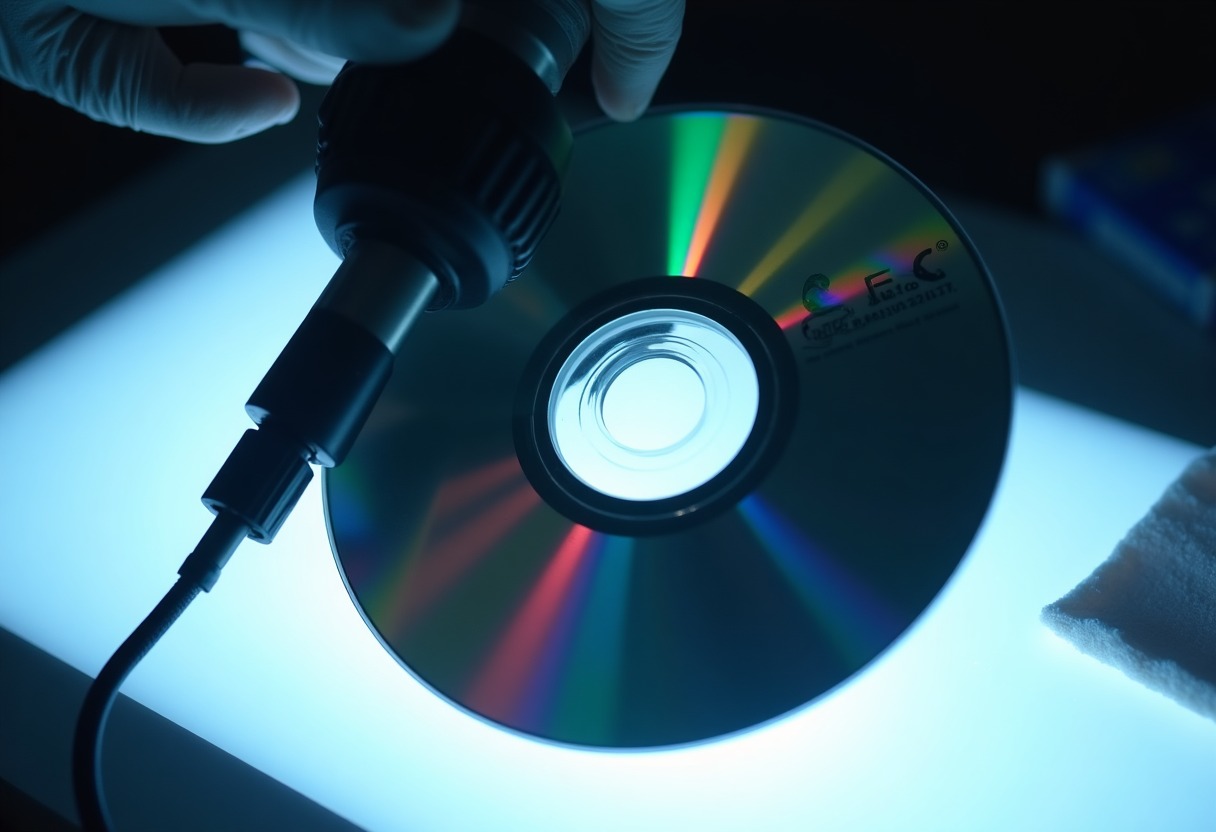
Your Dreamcast collection represents hundreds of hours of gameplay and potentially thousands of dollars in investment, but the proprietary GD-ROM format makes these discs uniquely vulnerable to degradation that can destroy playability and tank resale value within months. Unlike standard CDs that might take decades to show deterioration, Dreamcast discs suffer from manufacturing inconsistencies that accelerate breakdown, particularly in titles pressed between 1999 and 2001.
Why Dreamcast Disc Rot Happens Faster Than Other Optical Media
The Sega Dreamcast used GD-ROMs (Gigabyte Disc Read-Only Memory), which crammed 1.2GB of data onto a disc designed for 700MB by using higher-density pits in the outer data ring. This engineering decision created structural vulnerabilities that standard CD manufacturing wasn't optimized to handle. The bonding adhesive between the polycarbonate layers degrades when exposed to humidity fluctuations above 60% or temperature swings exceeding 15°F within 24 hours.
Three manufacturing plants produced the majority of Dreamcast discs: one in California, one in Austria, and one in Japan. The Austrian plant, which pressed most European PAL releases, used a different adhesive formulation that shows premature separation in approximately 22% of discs according to preservation community testing. You'll recognize these discs by the "Made in Austria" stamp on the inner ring.
The bronze reflective layer oxidizes when microscopic pinholes in the protective lacquer allow air contact with the metal surface. Once oxidation starts, it spreads radially at roughly 2-3mm per year under typical storage conditions. Games stored in jewel cases with cracked hinges or missing back inserts experience faster degradation because airflow accelerates the chemical reaction.
How to Identify Dreamcast Disc Rot Before It Destroys Your Games
Hold each disc up to a bright LED light source at a 45-degree angle. Healthy GD-ROMs show consistent bronze coloring across the entire data surface with no translucent spots. Early-stage rot appears as pinpoint bronze speckling that looks like tiny coffee stains, typically starting at the outer edge where the high-density data ring sits.
Mid-stage degradation shows as cloudy patches or a brownish haze spreading inward from the disc edge. You'll notice these areas feel slightly rougher to the touch than undamaged sections. The disc still boots at this stage, but you'll encounter random freezes during loading sequences or FMV playback stuttering.
Advanced rot creates visible holes in the reflective layer where the bronze coating has completely oxidized away, leaving transparent windows through the polycarbonate. These discs might boot to the main menu but crash during gameplay when the laser reaches corrupted sectors. Check your most valuable titles first—limited releases like Cannon Spike, Mars Matrix, and Project Justice command premium prices that justify preservation effort.
Test suspected discs by loading them past the title screen into actual gameplay, then navigate to areas with frequent disc access (open-world zones, stage transitions). Audio skipping during in-game music is the first functional symptom, appearing months before visual artifacts. Similar inspection techniques apply across optical media formats, as detailed in our PlayStation 1 Disc Condition Grading Guide.
Dreamcast Disc Condition Grading and Value Impact
| Condition Grade | Visual Characteristics | Playability | Market Value Impact | |----------------|------------------------|-------------|---------------------| | Mint/CIB | No bronze speckling, uniform reflective layer, zero scratches on label side | 100% reliable loading, no audio/video glitches | Full market value (100%) | | Good/Light Rot | 1-5 pinpoint bronze spots on outer edge, no cloudiness | Boots consistently, occasional minor audio skip | 60-75% market value | | Fair/Moderate Rot | Bronze cloudiness covering <20% of disc surface, visible from both sides | Boots reliably but crashes in specific game areas | 30-50% market value | | Poor/Advanced Rot | Transparent holes in reflective layer, extensive bronze oxidation | May not boot, frequent crashes if playable | 10-25% market value (parts/restoration only) |
Complete-in-box games with disc rot lose disproportionate value compared to the same title with superficial scratches. Collectors pay premiums for pristine disc surfaces because GD-ROM degradation is irreversible—you can resurface scratches, but you cannot restore oxidized bronze. A mint copy of Marvel vs. Capcom 2 sells for $180-220; the same complete set with moderate disc rot struggles to fetch $90.
The sealed market treats disc rot as catastrophic. Once you break the shrinkwrap to inspect disc condition, you've destroyed the sealed premium regardless of what you find inside. Factory-sealed Dreamcast games from 1999-2001 carry significant rot risk, creating a gamble for buyers who can't verify condition without destroying collectibility.
Essential Tools for Dreamcast Game Preservation
Start with proper storage before considering restoration tools. → Shop archival disc sleeves on Amazon made from acid-free polypropylene that won't leach chemicals onto disc surfaces. Standard paper sleeves contain lignin that accelerates oxidation through contact with the lacquer layer.
For discs with surface scratches but no rot, a → Shop disc resurfacing machine on Amazon removes micro-abrasions that cause read errors. The JFJ Easy Pro or Venmill models work well for home collectors running 10-20 discs monthly. Never resurface a disc showing bronze oxidation—you'll sand through the protective lacquer and expose more metal to air, accelerating rot.
Clean discs regularly with a → Shop CD DVD cleaning kit on Amazon that includes microfiber cloths and isopropyl alcohol solution. Wipe from the center hole straight out to the edge, never in circular motions that can create circumferential scratches. Monthly cleaning removes dust particles that trap moisture against the disc surface.
Replace cracked jewel cases immediately with → Shop jewel case replacement on Amazon standard 10mm cases. Broken cases allow humidity fluctuation that promotes oxidation. Store games vertically like books rather than stacked horizontally—horizontal stacking puts pressure on the center hub that can crack the polycarbonate over time.
Advanced Preservation Strategies Most Collectors Miss
Create digital backup images of your entire collection using a Dreamcast-compatible optical drive and specialized software. This doesn't prevent physical disc rot, but guarantees you'll always have playable versions of your games. Store backup files on redundant external drives kept in different physical locations—cloud storage alone isn't reliable for multi-gigabyte game images.
Monitor storage environment with a digital hygrometer that tracks humidity and temperature over time. Dreamcast discs survive longest at 35-45% relative humidity and 65-70°F constant temperature. Basements typically run too humid; attics experience too much temperature swing. Interior closets in climate-controlled living spaces provide ideal conditions.
Inspect your collection quarterly using a systematic rotation. Check your ten most valuable games monthly, mid-tier titles quarterly, and common games annually. Document condition with dated photos showing the disc surface under consistent lighting. This photographic record proves condition history when selling and helps you track degradation rates across your collection.
Consider selling duplicate copies with early-stage rot before degradation advances. A disc showing 2-3 bronze pinpoints today might be worth $60; the same disc with cloudiness six months from now drops to $25. The used market accepts light rot at reduced prices, but moderate-to-advanced rot makes games nearly unsellable except to restoration hobbyists.
Double-check disc authenticity using the techniques outlined in our Game Boy Advance Cartridge Authentication Guide—while focused on cartridges, the verification principles apply to identifying reproduction Dreamcast discs that won't match original manufacturing quality. Reproduction GD-ROMs often use inferior adhesive and reflective coatings that rot faster than authentic pressings.
FAQ
What causes Dreamcast disc rot to progress faster than PlayStation or Saturn disc degradation?
GD-ROMs use higher pit density in the outer data ring, which required thinner polycarbonate substrates and different adhesive formulations than standard CD manufacturing. The thinner substrate flexes more during temperature changes, creating microscopic stress fractures that allow air penetration to the bronze reflective layer. Additionally, Sega contracted multiple pressing plants with inconsistent quality control—the Austrian plant's adhesive shows failure rates 3-4 times higher than Japanese pressings. Standard PlayStation CDs use uniform worldwide manufacturing with thicker substrates and more stable adhesive chemistry.
Can I stop disc rot from progressing once it starts, or is degradation always fatal?
Bronze oxidation is irreversible chemical breakdown of the metallic layer—once started, you cannot stop or reverse the process. However, you can dramatically slow progression by controlling storage environment and eliminating humidity fluctuation. Sealing affected discs in individual archival sleeves with desiccant packets inside a climate-controlled space reduces oxidation spread from 2-3mm annually to less than 0.5mm. Discs with early pinpoint rot often remain playable for 10+ years under optimal conditions, while those stored in humid basements can become unreadable within 18 months.
How do I test if a sealed Dreamcast game has disc rot without breaking the shrinkwrap?
You can't definitively verify disc condition without opening sealed games, but strong LED flashlight inspection through the transparent jewel case back sometimes reveals advanced rot as cloudy patches visible through the case. Hold the sealed game against bright light at multiple angles—healthy bronze appears uniform, while moderate-to-advanced rot shows as darker or lighter patches. This method only catches severe cases; early-stage pinpoint oxidation remains invisible through packaging. The sealed Dreamcast market exists in a constant value versus preservation tension that makes collecting factory-sealed 1999-2001 releases a calculated risk.
Which Dreamcast titles are most susceptible to disc rot based on pressing plant and manufacturing date?
European PAL releases pressed at the Austrian plant between late 1999 and mid-2000 show the highest rot incidence, affecting titles like Shenmue, Sonic Adventure, and Crazy Taxi PAL editions. North American releases from the California plant during the same period also exhibit elevated failure rates, particularly launch window titles rushed to market. Japanese domestic releases generally have the lowest rot rates due to stricter manufacturing standards. Check the inner ring stamp—"Made in Austria" or "Made in USA" with a 1999-2000 date code indicates higher risk. Later pressings from 2001 onward used improved adhesive formulations with better longevity.
Does cleaning Dreamcast discs with alcohol or commercial cleaners accelerate rot progression?
Isopropyl alcohol at 70-91% concentration is safe for GD-ROMs when applied with microfiber cloths—it evaporates quickly without damaging the protective lacquer layer. Avoid cleaners containing ammonia, acetone, or petroleum distillates that can dissolve or soften the lacquer, exposing bronze to air. Commercial "disc repair fluids" marketed for scratch removal sometimes contain mild abrasives that thin the lacquer with repeated use. For routine cleaning, distilled water and microfiber cloths work adequately without chemical risk. Never use paper towels, which contain wood fibers that scratch lacquer, or tap water, which leaves mineral deposits that trap moisture against the disc surface.
Protect Your Investment Before Time Runs Out
Dreamcast disc rot advances whether you're actively playing your collection or leaving it boxed on a shelf, making proactive preservation the only strategy that maintains both playability and market value.
Some links on this page are affiliate links. We may earn a small commission if you purchase through them, at no extra cost to you.
As an Amazon Associate we earn from qualifying purchases. This article contains affiliate links; if you buy through them we may earn a small commission at no additional cost to you.