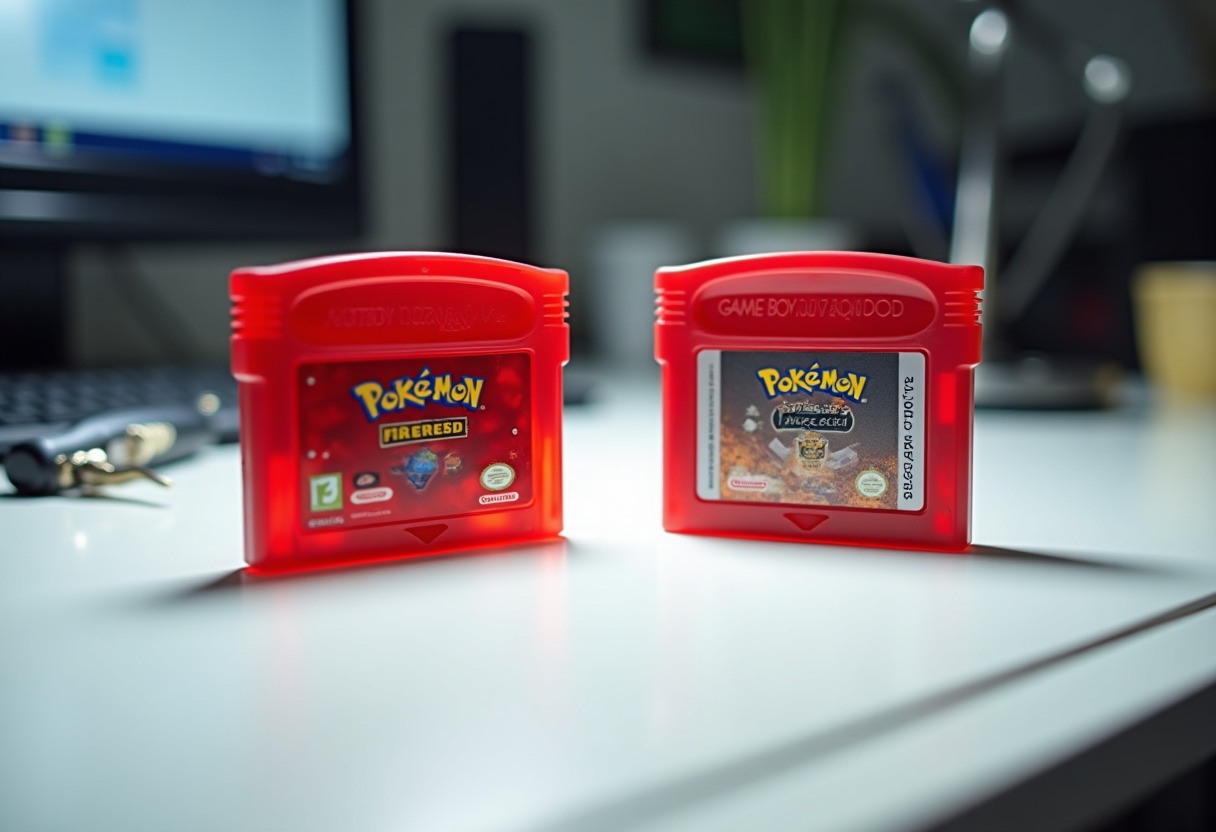
Reproduction GBA cartridges flooded the market around 2015, and today they outnumber authentic copies of popular titles like Pokémon Emerald and Fire Emblem by margins that would shock most collectors. The $80 Fire Emblem cart you're eyeing might be a $12 reproduction in a decent shell, and the telltale signs aren't always where you expect them.
Why GBA Cartridge Authentication Matters More Than Other Platforms
The Game Boy Advance hit its stride during the transition to digital manufacturing, meaning Nintendo produced cartridges with consistent tooling marks and specific PCB configurations that reproductions struggle to replicate perfectly. Unlike the authentication challenges covered in our Game Boy Cartridge Authentication Guide, GBA carts feature transparent shells that expose internal components, giving collectors a significant advantage during inspection.
The reproduction problem centers on high-value titles. Games selling for $50-200 attract counterfeiters because the profit margin justifies the manufacturing cost. Pokémon games, Fire Emblem series, Castlevania titles, and Mega Man Battle Network entries see reproduction rates exceeding 60% on secondary markets. Budget titles rarely get reproduced—nobody counterfeits Frogger's Adventures.
Authentication protects both your wallet and your collection's integrity. Reproduction carts save data unreliably, crash during gameplay, and tank resale value the moment you disclose their authenticity. If you're building a collection covered by our Complete CIB Retro Game Condition Grading Guide, authentication becomes mandatory.
Shell Authentication: The First Line of Defense
Authentic GBA shells use ABS plastic with specific molding characteristics. Hold the cart up to bright light and examine the shell transparency. Nintendo's plastic shows consistent light diffusion with a slightly smoky quality. Reproduction shells often appear either too clear (cheap polycarbonate) or completely opaque in the wrong areas.
The number stamp on the cart label provides your starting point. Authentic games feature a two-digit number pressed into the label, typically "00" through "99". This stamp sits in the lower-right corner and shows slight indentation you can feel with your fingernail. Reproductions either skip this stamp entirely or print it instead of pressing it.
Check the screw in the bottom-right corner. Nintendo used a triwing security screw—a triangular design with three wings radiating from the center. You'll need a → Shop triwing screwdriver gamebit on Amazon to open authentic carts. Many reproductions use Phillips screws because manufacturers can't source triwing screws economically.
The shell seam reveals manufacturing quality. Run your fingernail along where the front and back shells meet. Authentic carts show tight, even seams with no gaps or misalignment. The two halves snap together with precision tooling that leaves minimal play. Reproduction shells often feature uneven gaps, especially near the top corners, and the halves sometimes don't sit flush.
PCB Inspection: Where Reproductions Reveal Themselves
Opening the cartridge exposes the printed circuit board, and this is where authentication becomes definitive. Authentic GBA PCBs follow specific layouts that Nintendo refined across production runs, and reproductions deviate in consistent ways.
The PCB color matters. Nintendo used green PCBs almost exclusively, with occasional black boards in early production runs. If you see blue, red, or purple PCBs, you're holding a reproduction. The only exceptions are prototype or development cartridges, which you won't encounter in normal collecting channels.
Check the board number stamped on the PCB. Authentic boards display codes like "AGB-E05-01" or similar alphanumeric sequences. These numbers appear printed directly on the PCB in white or yellow ink. Reproductions either lack board numbers entirely or show nonsensical codes that don't match Nintendo's numbering system.
The ROM chip position provides another authentication marker. On genuine carts, the large ROM chip sits in the center-left area of the board, with a smooth black epoxy coating. Reproduction ROM chips often feature different coatings—glossy instead of matte, or showing visible die outlines through semi-transparent epoxy. Some reproductions use multiple smaller chips instead of Nintendo's single large ROM.
Battery presence separates real from fake in specific games. Pokémon Ruby, Sapphire, Emerald, and FireRed/LeafGreen use CR1616 batteries for real-time clock functions. Authentic versions show a cylindrical battery soldered to the PCB. Many reproductions skip the battery entirely or use incorrect battery types. Games without real-time clock features (most non-Pokémon titles) shouldn't have batteries at all.
Authentication Comparison: Authentic vs Reproduction Features
| Feature | Authentic GBA Cart | Reproduction Cart | |---------|-------------------|-------------------| | Shell Plastic | Smoky translucent ABS, even light diffusion | Too clear or completely opaque, inconsistent transparency | | Label Number Stamp | Pressed two-digit indent, tactile feel | Printed numbers or missing entirely | | Screw Type | Triwing security screw | Phillips head or flat-head screws | | PCB Color | Green (occasionally black in early production) | Blue, red, purple, or other non-standard colors | | ROM Chip Coating | Matte black epoxy, single large chip | Glossy coating, multiple smaller chips, or visible die | | Board Number | Nintendo format (AGB-E05-01 style) | Missing, nonsensical, or incorrect format |
Essential Tools for GBA Authentication
Professional authentication requires specific tools. A → Shop jewelers loupe magnifier on Amazon lets you examine label printing quality, number stamps, and PCB details at 10x-30x magnification. The $15-25 investment pays for itself the first time you catch a convincing reproduction.
Good lighting makes marginal details visible. A bright LED desk lamp with adjustable positioning reveals shell transparency issues and label printing artifacts that room lighting misses. Position the cart at various angles to catch reflections that expose uneven printing or plastic inconsistencies.
Storage matters for authentication reference. Keep a → Shop game cartridge storage cases on Amazon organized by authentication status—verified authentic, suspected reproduction, and needs inspection. This system prevents mixing authenticated and unverified carts, which becomes critical as collections grow past 50-100 games.
A → Shop GBA game cleaning kit on Amazon helps with initial inspection. Dirty contacts and label grime obscure authentication markers. Clean the cart thoroughly before making authentication judgments, especially when buying Best Game Boy Games To Collect 2026 at conventions or estate sales.
Advanced Authentication: Label and Manufacturing Details
Label printing quality separates professional reproductions from obvious fakes. Authentic labels use offset printing with specific CMYK registration and color density. Hold the label at an angle under bright light—you'll see a slight texture from the printing dots, but these dots maintain consistent size and spacing.
Reproduction labels show telltale printing artifacts. Many use inkjet or low-quality digital printing that creates visible banding when viewed at angles. Colors often appear oversaturated or show incorrect hue shifts compared to authentic labels. The Nintendo logo deserves special attention—the font weight and spacing should match known good examples exactly.
The label's edge cut matters. Nintendo used die-cutting that leaves clean, straight edges with sharp corners. Reproduction labels sometimes show ragged cuts or corners that aren't precisely 90 degrees. The label should sit perfectly aligned with the shell edges, not crooked or offset.
Region-specific details provide authentication shortcuts. North American carts feature an "ESRB" rating logo that reproductions sometimes get wrong—incorrect font size, wrong placement, or outdated rating symbols. European PAL carts show age ratings that follow specific formatting rules. Japanese carts include publisher codes that follow established patterns.
Functional Testing: The Final Authentication Layer
Boot behavior reveals reproduction firmware issues. Authentic carts load to the title screen in consistent timeframes—typically 2-3 seconds after the Game Boy Advance logo appears. Reproductions sometimes show loading delays, graphical glitches during startup, or unusual color flashing.
Save functionality exposes reproduction cart limitations. Play for 30 minutes, save your game, then power cycle the console. If the save disappears immediately or within a few days, you're holding a reproduction. Some fake carts use cheap flash memory that corrupts saves randomly or fails after limited write cycles.
Test on multiple consoles if possible. Reproductions sometimes work perfectly on one GBA model but glitch on others. The SP, Micro, and original GBA models all access cartridge data slightly differently, and reproduction boards occasionally fail on specific hardware revisions. Testing across the Best Retro Gaming Handhelds helps catch edge cases.
Audio quality provides subtle clues. Compare sound effects and music to gameplay footage from verified authentic carts. Reproduction ROM dumps sometimes contain audio compression artifacts or slight timing issues that trained ears detect. This method requires reference material but works when visual inspection proves inconclusive.
FAQ
Can reproduction GBA cartridges damage my console or other games? Reproduction carts generally won't damage your Game Boy Advance hardware because they operate within the same voltage and electrical specifications as authentic carts. However, poorly manufactured reproductions occasionally cause interference with other cartridges stored nearby due to inadequate shielding on their PCBs. The real risk lies in data corruption—reproduction save chips fail unpredictably, potentially wiping 50+ hours of gameplay. Some reproduction batteries also leak when they fail, though this happens far less frequently than with authentic carts simply due to age differences.
Why do some reproduction GBA games cost almost as much as authentic copies? High-quality reproductions with proper shells, accurate labels, and functional save batteries cost $25-40 to manufacture in small batches, especially for games requiring special chips like the real-time clock in Pokémon Emerald. Sellers price these at $50-80 to maintain profit margins while staying below authentic cart prices of $100-200. Additionally, some sellers deliberately price reproductions near authentic values to deceive buyers who assume higher prices indicate authenticity. Always authenticate based on physical characteristics rather than price alone.
Do reproduction GBA cartridges work with official accessories like the Game Boy Player? Most reproduction cartridges function normally with the Game Boy Player and other official accessories like the Wireless Adapter or link cables. The Game Boy Player reads cartridge data the same way a standard GBA console does, so reproduction ROM chips typically work without issues. However, some reproductions struggle with the e-Reader connection or multiplayer features that require precise timing synchronization. Features dependent on the real-time clock—like Pokémon Berry growth or Boktai's sunlight sensor—often fail on reproductions that skip these specialized components to reduce manufacturing costs.
Can I get a reproduction GBA cartridge authenticated and graded by services like WATA or VGA? Professional grading services will not grade reproduction cartridges because their entire business model depends on authenticating and encapsulating legitimate games. WATA and VGA perform authentication as part of their grading process, and reproduction carts fail this step immediately. If you submit a reproduction knowingly, you'll receive your cart back ungraded with authentication failure notes. If you submit one unknowingly, you've paid $50-100+ in grading fees for the same result. Authentication must happen before considering professional grading.
Are there any legitimate reasons to buy reproduction GBA cartridges? Reproduction carts serve valid purposes for players who want to experience games without collecting concerns. If you're learning Japanese using Pokémon and don't want to risk a $200 authentic copy, a reproduction makes sense. Homebrewers and ROM hackers use reproduction shells to create physical copies of fan translations or difficulty hacks. Some collectors buy reproductions of impossibly rare titles like Nintendo World Championships to represent gaps in their displays, provided they clearly label them as reproductions. The problem isn't reproductions existing—it's sellers misrepresenting them as authentic to inflate prices.
Protecting Your Collection Investment
Authentication separates collectors from casual buyers. Every GBA cart entering your collection deserves the same inspection rigor covered in our Complete CIB Retro Game Condition Grading Guide—visual examination, PCB inspection, and functional testing create authentication confidence that protects both your investment and gameplay experience. The five minutes spent authenticating today prevents the frustration of discovering a $150 reproduction in your Best Game Boy Games To Collect 2026 three years from now.
Some links on this page are affiliate links. We may earn a small commission if you purchase through them, at no extra cost to you.
As an Amazon Associate we earn from qualifying purchases. This article contains affiliate links; if you buy through them we may earn a small commission at no additional cost to you.