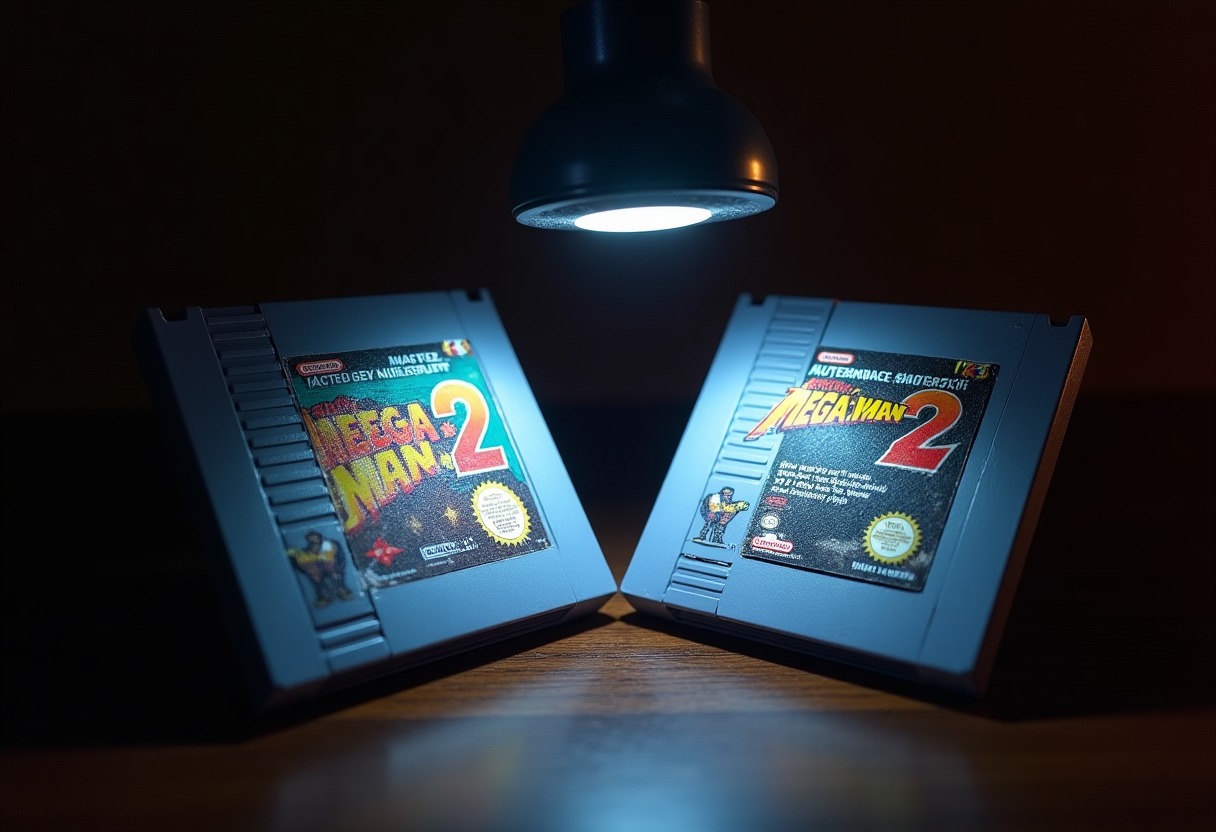
Reproduction NES labels flood the secondary market with quality so convincing that even seasoned collectors occasionally get fooled. The difference between an authentic label and a high-quality reproduction can mean hundreds of dollars in value—Stadium Events with an authentic label commands $15,000+, while the same cart with a reproduction label struggles to break $50.
Why Authentic NES Labels Matter More Than Ever
The retro gaming market reached $4.2 billion in 2023, with Nintendo Entertainment System games driving significant collector demand. This surge created a parallel market for reproduction labels that range from obvious fakes to museum-quality recreations using period-appropriate materials and printing techniques.
Authentic NES labels carry three critical authentication markers that most collectors miss: the specific adhesive aging pattern, Nintendo's proprietary ink formulation from the 1980s, and microscopic printing registration marks visible only under magnification. These details separate genuine labels from even the most sophisticated reproductions.
Nintendo used a specific label stock manufactured by Moore Business Forms through 1988, then switched to Multi-Color Corporation for later releases. This manufacturing change creates two distinct authentic label types with different paper textures, adhesive properties, and aging characteristics.
Visual Authentication: The Details That Matter
Paper texture reveals the first major authentication clue. Original NES labels use a semi-gloss paper with a specific grain pattern running horizontally across the label. Reproductions typically use modern vinyl sticker material or photo paper that feels smoother and lacks this distinctive texture.
→ Shop magnifying glass jewelry loupe on Amazon to examine these fine details properly.
The Nintendo Seal of Quality provides the most reliable authentication point. Authentic seals show slight variations in gold foil intensity and contain micro-text around the border that reproduction printers cannot replicate accurately. Under 10x magnification, genuine seals display crisp lettering with no halftone dot patterns, while reproductions show visible printing dots.
Color saturation differs significantly between authentic and reproduction labels. Original labels used specific Pantone colors that fade predictably over 35+ years. Reproductions either appear too vibrant (indicating modern printing) or use incorrect color matching that becomes obvious when compared directly to confirmed authentic labels.
Edge wear patterns tell another authentication story. Authentic labels develop specific wear characteristics: corners lift first, followed by edge curling in humid environments. The adhesive yellows in a particular pattern, creating darker areas along the edges. Reproductions applied to used cartridges often show inconsistent wear patterns that don't match the cart's actual age and handling.
Authentication Comparison Table
| Feature | Authentic Labels | Reproduction Labels | |---------|-----------------|-------------------| | Paper Texture | Semi-gloss with horizontal grain | Smooth vinyl or photo paper | | Nintendo Seal | Gold foil variations, crisp micro-text | Uniform appearance, halftone dots visible | | Color Accuracy | Pantone colors with predictable fading | Too vibrant or incorrect color matching | | Edge Wear | Natural aging with yellowed adhesive patterns | Inconsistent wear or artificially aged appearance |
Essential Authentication Tools
A proper authentication setup requires specific equipment beyond basic magnification. A jeweler's loupe with 10x magnification reveals printing dot patterns and micro-text details invisible to the naked eye. UV blacklight helps identify modern adhesives that fluoresce differently than period-appropriate materials.
→ Shop cartridge cleaning supplies on Amazon to safely examine labels without causing damage during authentication.
Digital calipers measure label thickness accurately—authentic NES labels measure 0.004 inches thick, while most reproductions use thicker modern materials. This measurement alone eliminates many fake labels from consideration.
Color temperature lighting matters during authentication. Authentic labels should be examined under 6500K daylight bulbs, which reveal color accuracy issues that warm incandescent lighting masks. Many reproductions look convincing under yellow household lighting but show obvious problems under proper illumination.
Market Value Impact Assessment
Label authenticity creates dramatic value differences across the NES library. Common titles like Super Mario Bros. lose 70-80% of their value with reproduction labels, while rare games face even steeper penalties. Little Samson with an authentic label trades for $800-1,200, but the same cart with a reproduction label struggles to reach $200.
→ Shop retro game storage cases on Amazon to protect authentic labels from further degradation that could impact future value.
Collectors distinguish between different reproduction quality levels when pricing. Professional reproductions using correct paper stock and accurate colors command higher prices than obvious print-at-home fakes. However, even the highest quality reproductions rarely exceed 20% of authentic label values for most titles.
The authentication process becomes critical when dealing with high-value titles. Games worth over $500 with authentic labels should receive professional authentication before purchase. Services like Video Game Authority (VGA) and Certified Game Experts (CGE) provide authentication services that many serious collectors require for expensive purchases.
For collectors building comprehensive collections, understanding reproduction identification protects against costly mistakes. Similar authentication techniques apply to other Nintendo systems—our Game Boy Cartridge Authentication Guide covers portable game authentication using comparable methods.
Advanced Detection Techniques Most Guides Skip
Adhesive analysis provides authentication evidence that most collectors overlook. Original NES labels used water-based adhesive that ages to a amber or brown color over time. Modern reproduction labels typically use acrylic adhesives that remain clear or develop different discoloration patterns.
The "wet test" reveals paper composition differences without damaging labels. Place a tiny drop of distilled water on an inconspicuous label edge. Authentic label paper absorbs water slowly with minimal color bleeding. Modern photo papers used for reproductions either repel water completely or show immediate ink bleeding.
→ Shop NES cartridge shells on Amazon for collectors creating custom cartridges who want to understand construction differences.
Print registration marks appear on authentic labels as microscopic alignment crosses used during the printing process. These marks, visible only under high magnification, appear in specific locations on genuine labels but are absent from reproduction labels that use modern digital printing methods.
Nintendo's internal quality control left authentication clues that sophisticated collectors recognize. Authentic labels show slight variations in print registration between different production runs. Labels from the same batch display consistent characteristics, while reproductions often show too-perfect uniformity that indicates modern printing methods.
Label Preservation and Storage
Proper storage prevents further degradation that could complicate future authentication. Original NES cartridges should be stored vertically in climate-controlled environments with 40-50% humidity. Higher humidity accelerates adhesive deterioration and label separation.
→ Shop game label printing paper on Amazon for collectors interested in understanding reproduction materials and techniques.
Temperature fluctuations cause expansion and contraction that loosens label adhesion over time. Consistent 65-70°F storage temperatures preserve authentic labels better than environments with daily temperature swings. Direct sunlight exposure fades colors and weakens adhesive bonds, making authentication more difficult.
For collectors with mixed authentic and reproduction carts, clear documentation prevents future confusion. Photography under consistent lighting conditions creates authentication references that help identify any label swapping attempts. Many collectors maintain detailed spreadsheets noting authentication characteristics for each cartridge in their collection.
The relationship between cartridge condition and label authenticity extends beyond visual inspection. Games with authentic labels but damaged shells often receive reproduction shells during restoration, creating hybrid cartridges that require careful documentation for accurate value assessment.
FAQ
How can I tell if a NES label is reproduction without damaging it? Examine the Nintendo Seal of Quality under 10x magnification—authentic seals show gold foil variations and crisp micro-text without halftone dots. Check paper texture by gently running your finger along the label surface; originals have a distinctive horizontal grain pattern while reproductions feel smoother. Look at color saturation under daylight bulbs; reproductions often appear too vibrant or use incorrect color matching compared to known authentic examples.
What specific tools do I need for accurate NES label authentication? Essential tools include a 10x jeweler's loupe for examining printing details and micro-text, digital calipers to measure label thickness (authentic labels are 0.004 inches thick), and a UV blacklight to check adhesive fluorescence. You'll also need 6500K daylight bulbs for proper color temperature examination and distilled water for the absorption test. A smartphone with macro photography capability helps document authentication evidence for future reference.
Do reproduction labels always hurt the value of NES cartridges significantly? Yes, reproduction labels create dramatic value drops across the entire NES library. Common games lose 70-80% of their value with reproduction labels, while rare titles face even steeper penalties. Even high-quality professional reproductions rarely exceed 20% of authentic label values. The only exception is extremely rare games where authentic copies are virtually unobtainable—in these cases, well-documented reproductions maintain some collector interest but still trade at massive discounts.
Which NES games are most commonly found with reproduction labels? High-value titles like Stadium Events, Little Samson, Panic Restaurant, and Flintstones: Surprise at Dinosaur Peak frequently appear with reproduction labels due to their extreme values. Common games with damaged original labels also receive reproduction replacements regularly. Sports titles from later NES years (1991-1994) often have reproduction labels because their original adhesive was particularly prone to failure. Always authenticate expensive purchases regardless of the seller's reputation.
Can I legally sell NES cartridges with reproduction labels? You can legally sell cartridges with reproduction labels if you clearly disclose the label's reproduction status in all listings and communications. Misrepresenting reproduction labels as authentic constitutes fraud and violates most selling platform policies. Many collectors prefer honest sellers who clearly mark reproduction labels over those who remain silent about authenticity. Proper disclosure actually builds trust and can lead to repeat customers who appreciate transparency in the retro gaming market.
Master these authentication techniques to protect your collection investments and build confidence in the increasingly complex NES marketplace.
Some links on this page are affiliate links. We may earn a small commission if you purchase through them, at no extra cost to you.
As an Amazon Associate we earn from qualifying purchases. This article contains affiliate links; if you buy through them we may earn a small commission at no additional cost to you.