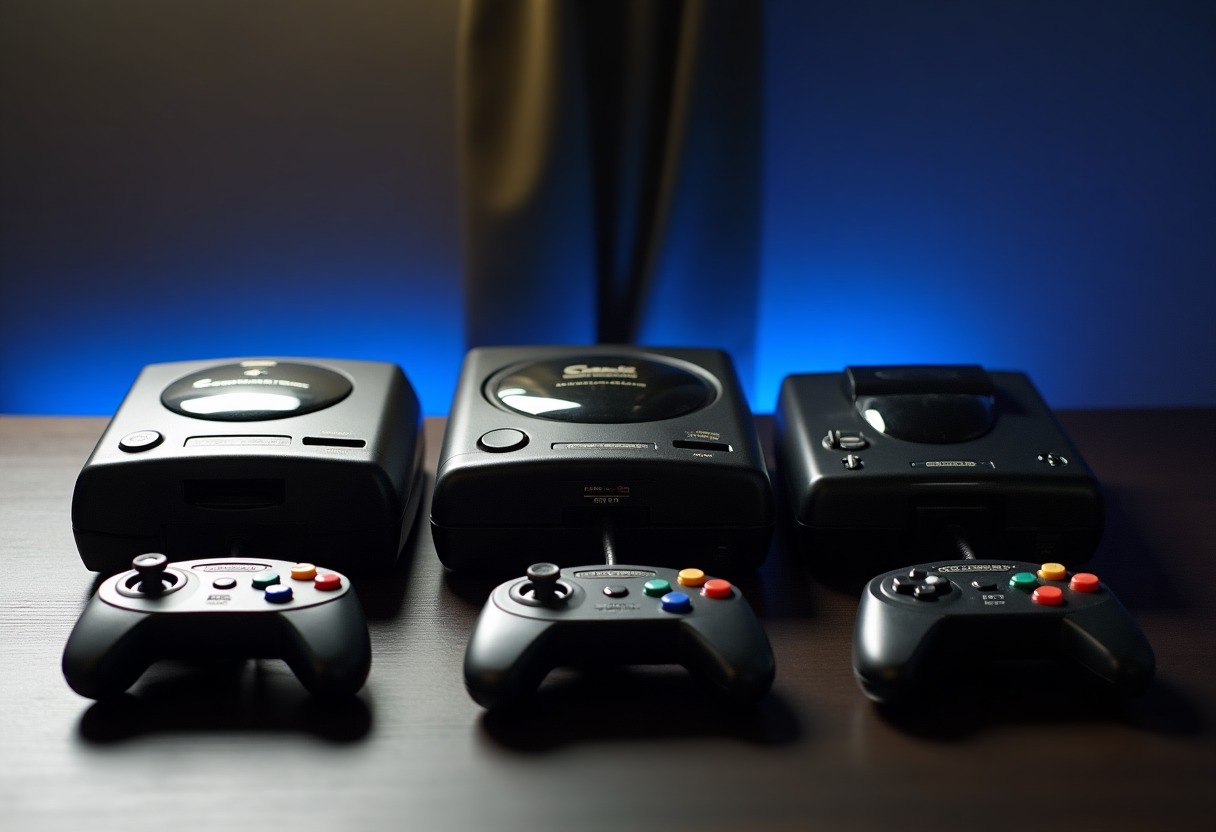
The Sega Genesis spawned three distinct hardware revisions between 1989 and 1998, each with specific design changes that affect both performance and collectibility. Model identification matters because audio quality differences, port configurations, and current market values vary significantly between revisions.
Why Model Identification Matters for Collectors
Audio purists obsess over the Genesis Model 1's superior sound chip implementation, while pragmatic collectors often prefer the Model 2's compact form factor and reliable power supply. The Yamaha YM2612 FM synthesis chip produces noticeably different tonal characteristics across models due to varying amplifier circuits and filtering components.
Model 1 consoles command premium prices specifically for their audio fidelity—the headphone jack feeds directly from the main audio circuit, bypassing the RF modulator that muddles sound in later revisions. Model 2 units sacrifice some audio clarity for cost reduction and space efficiency. Model 3 consoles, while functional, represent Sega's budget-focused final revision with the most compromised audio output.
Market values reflect these performance differences, with complete Model 1 systems averaging 40-60% higher prices than equivalent Model 2 units in similar condition.
Genesis Model 1 Identification and Features
The Model 1 Genesis stands 3.2 inches tall with a distinctive curved front edge and prominent power LED positioned on the cartridge door. The power switch sits on the front-right corner, clicking with satisfying mechanical feedback that later models abandoned.
Port configuration defines the Model 1: headphone jack and volume slider occupy the front-left corner, with stereo RCA outputs flanking the RF output on the rear panel. The → Shop Genesis Model 1 on Amazon console requires a substantial brick-style power adapter outputting 10V DC at 1.2A.
Two Model 1 variants exist—early units feature a larger, more robust power adapter connection, while later revisions switched to a smaller barrel connector matching the Model 2's power requirements. The "High Definition Graphics" text below the cartridge slot appears on all authentic Model 1 units.
Audio quality remains the Model 1's standout feature. The headphone output drives full dynamic range without compression, making it essential for purists recording gameplay footage or simply appreciating the Genesis sound design as composers intended.
Genesis Model 2 vs Model 3 Design Evolution
Sega dramatically redesigned the Genesis for Model 2 production, shrinking the footprint by 30% and reducing height to 2.75 inches. The curved aesthetic disappeared in favor of angular edges and a flatter profile that stacked more efficiently during shipping and retail display.
The power switch moved to the top surface alongside the reset button, both now using membrane-style switches instead of mechanical components. This change reduced manufacturing costs but eliminated the tactile feedback collectors appreciate in the original model.
| Feature | Model 1 | Model 2 | Model 3 | |---------|---------|---------|---------| | Height | 3.2 inches | 2.75 inches | 2.1 inches | | Headphone Jack | Yes, front-left | No | No | | Power Switch | Front mechanical | Top membrane | Top membrane | | RF Output | Dedicated port | Shared A/V port | Shared A/V port | | Audio Quality | Superior | Good | Compromised |
Model 3 consoles represent Sega's final cost-cutting effort, measuring just 2.1 inches tall with the most compact footprint of any Genesis revision. The cartridge slot depth decreased noticeably, occasionally causing compatibility issues with larger cartridges or Game Genie adapters.
Audio output quality suffered most dramatically in the Model 3. The simplified circuit design produces muddier bass response and compressed dynamic range compared to earlier models, making these units primarily suitable for casual gaming rather than serious collecting.
Recommended Genesis Models and Accessories
For serious collectors, the Model 1 Genesis with "Made in Japan" labeling represents the pinnacle of build quality and audio performance. → Shop Sega Genesis Console on Amazon systems command higher prices but deliver the authentic 16-bit audio experience that defined the platform.
Budget-conscious collectors should target Model 2 units manufactured between 1993-1995, which maintain solid build quality while offering improved reliability over aging Model 1 systems. The compact design suits modern entertainment centers better than the original's imposing presence.
Essential accessories include → Shop Genesis AV Cables on Amazon for improved video quality over RF connections. Model 1 systems benefit from aftermarket stereo RCA cables that bypass the muddy composite video output entirely.
Power supply replacement becomes critical for Model 1 longevity—original adapters fail frequently after 30+ years of service. → Shop Genesis Power Adapter on Amazon modern switching supplies provide cleaner power delivery than vintage linear adapters.
For display on modern televisions, consider pairing any Genesis model with solutions covered in our NES Sega Modern TV HDMI Guide for optimal video quality.
Advanced Identification Techniques and Restoration Notes
Serial number patterns provide definitive model identification when visual cues aren't clear. Model 1 systems use "MK-1631" designation, Model 2 units feature "MK-1631-09" or similar numerical suffixes, while Model 3 consoles carry "MK-1631-50" series numbers.
Internal board revisions matter significantly for audio quality within each model generation. Model 1 "VA6" and earlier motherboard revisions produce the cleanest audio, while "VA7" boards introduce minor filtering changes that affect high-frequency response. Model 2 "VA1" boards maintain decent audio fidelity, but later revisions progressively compromise sound quality through cost reduction.
Capacitor replacement becomes essential for aging Model 1 systems experiencing audio drift or power instability. The large electrolytic capacitors in the power supply section typically fail first, causing voltage regulation problems that stress other components.
Region modification remains popular among collectors seeking expanded game compatibility. Japanese Mega Drive systems offer identical hardware performance to US Genesis units but access different software libraries without regional lockout restrictions.
Console shell condition significantly impacts value—cracked or yellowed plastic reduces worth by 30-50% even when electronics function perfectly. Professional restoration services can reverse yellowing through retrobright treatments, though results vary based on plastic composition and damage severity.
FAQ
How can I tell if my Genesis is a Model 1, 2, or 3 just by looking at it? Check the height first—Model 1 stands tallest at 3.2 inches with a curved front edge, Model 2 measures 2.75 inches with angular design, and Model 3 sits lowest at 2.1 inches. The headphone jack and volume slider only appear on Model 1 units, positioned on the front-left corner. Power switch location also differs: Model 1 places it on the front-right corner with mechanical clicking, while Models 2 and 3 use membrane switches on the top surface alongside the reset button.
Which Genesis model has the best audio quality and why? Model 1 Genesis produces superior audio quality due to its direct headphone output circuit and less filtered analog audio path. The Yamaha YM2612 FM synthesis chip connects through fewer processing stages, maintaining full dynamic range without the compression applied in later models. Model 2 systems compromise audio slightly for cost savings, while Model 3 units feature heavily filtered output that muddies bass response and reduces overall clarity compared to the original design.
What's the current market value difference between Genesis models? Complete Model 1 systems typically sell for $80-120 depending on condition and included accessories, representing a 40-60% premium over equivalent Model 2 units priced at $50-75. Model 3 consoles command the lowest prices at $35-55 due to their compromised audio quality and late-generation manufacturing. Japanese Mega Drive Model 1 units often exceed $150 due to superior build quality and collector desirability, while boxed examples of any model can double these base prices.
Are there compatibility differences between Genesis models for games and accessories? Most Genesis games work identically across all three models, though some early titles may exhibit minor audio differences due to the varying sound circuits. The Game Genie and similar large accessories occasionally have clearance issues with the Model 3's reduced cartridge slot depth. Power-through accessories like the Sega CD require specific model compatibility—the Model 1 Sega CD only works with Model 1 Genesis systems, while the Model 2 Sega CD connects to both Model 2 and Model 3 consoles.
Should I buy a Genesis Model 1 if I mainly play on modern TVs with HDMI? Model 1's audio advantages remain relevant even with HDMI upscalers, as the superior analog output feeds into conversion devices with less noise and distortion. However, if you're using composite video connections or budget upscalers, the Model 2 offers better value with nearly identical visual performance and improved reliability over aging Model 1 systems. Consider your audio priorities—if Genesis music matters significantly to your gaming experience, the Model 1's premium is justified regardless of your display setup.
The Genesis model you choose shapes your 16-bit gaming experience more than most collectors realize, making identification skills essential for building the collection you actually want to play.
Some links on this page are affiliate links. We may earn a small commission if you purchase through them, at no extra cost to you.
As an Amazon Associate we earn from qualifying purchases. This article contains affiliate links; if you buy through them we may earn a small commission at no additional cost to you.