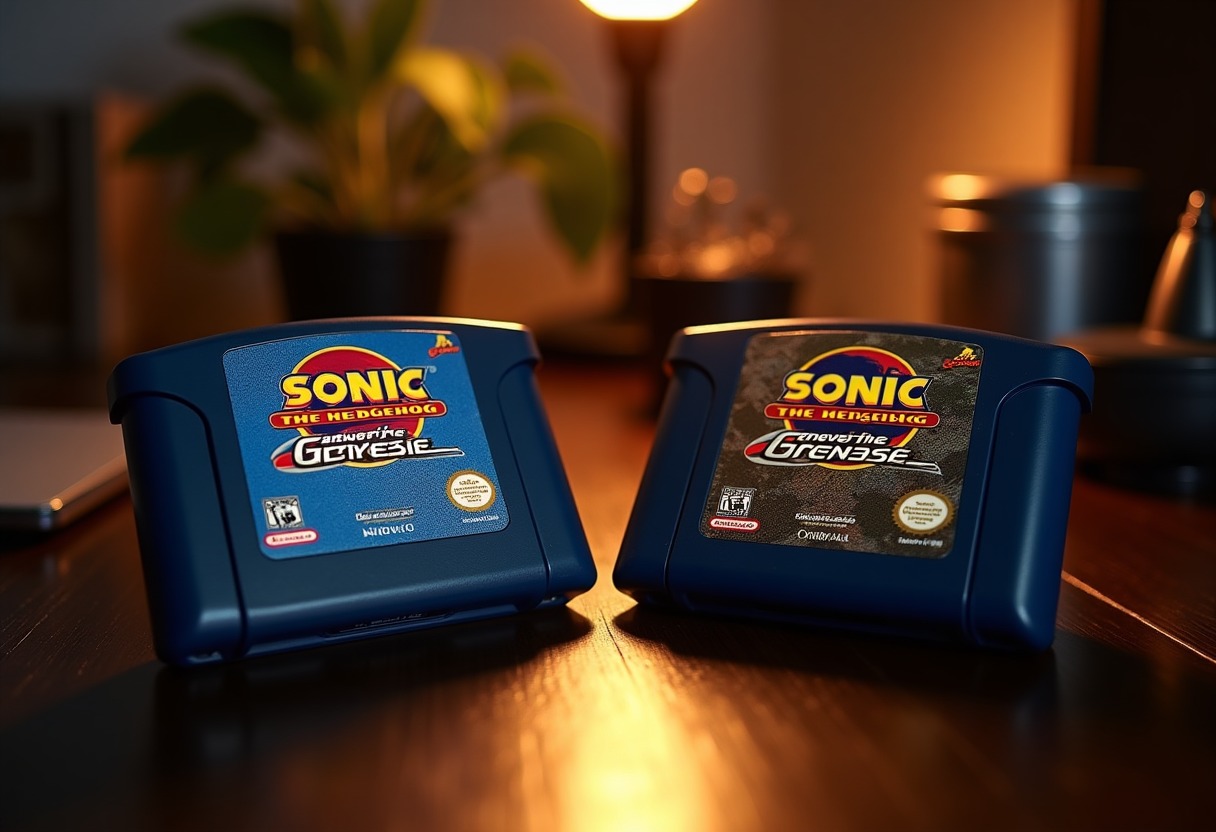
Reproduction Genesis labels flood the retro gaming market, threatening both your wallet and collection integrity. Within seconds of handling an authentic Genesis cartridge, experienced collectors can spot the telltale differences that separate originals from modern reproductions.
Why Genesis Label Authentication Matters More Than Ever
The Genesis cartridge market reached unprecedented heights in 2023, with pristine copies of games like Phantasy Star IV commanding over $300. This surge created a parallel economy of reproduction labels designed to transform worn copies into seemingly mint condition collectibles. Sega's original manufacturing specifications included specific paper stocks, adhesive formulations, and printing processes that modern reproductions struggle to replicate accurately.
The stakes extend beyond individual purchases. Reproduction labels artificially inflate supply of "mint" condition games, distorting price discovery for legitimate collectors. Understanding authentication protects both immediate buying decisions and long-term collection value.
Genesis cartridges used three distinct label eras: the early black grid pattern (1989-1991), the red warning label period (1991-1994), and the final "Not for Resale" variations. Each era presents unique authentication challenges, with reproduction quality varying significantly across manufacturers.
Physical Characteristics of Authentic Genesis Labels
Authentic Genesis labels feature a semi-gloss finish with subtle texture variations that catch light differently than modern reproductions. Original Sega labels used offset lithography printing on specialized paper stock, creating microscopic ink distribution patterns invisible to casual inspection but clearly visible under magnification.
The paper thickness measures approximately 0.004 inches, slightly thicker than standard computer paper but thinner than modern label stock. Authentic labels exhibit a distinctive "tooth" texture when viewed at extreme angles, caused by the original paper grain running vertically along the cartridge length.
Edge cutting precision serves as another reliable indicator. Original labels show clean, straight cuts with minimal fraying, achieved through industrial die-cutting processes. The adhesive backing extends precisely to label edges without overflow or shortage, maintaining consistent bond strength across the entire surface.
Color saturation follows specific Pantone specifications that reproduction manufacturers often miss. The classic Genesis red (Pantone 186 C) appears slightly darker and more saturated than most reproductions, which tend toward brighter, more orange-tinged reds. The black text uses true black ink rather than composite black, preventing the slight purple or green tints visible in some reproductions.
When examining → Shop Sega Genesis cartridges on Amazon, pay particular attention to label edges where reproduction quality often breaks down first.
Detailed Comparison: Original vs Reproduction Labels
| Feature | Original Labels | Reproduction Labels | |---------|----------------|-------------------| | Texture | Semi-gloss with vertical paper grain, subtle tooth texture | Often too glossy or completely matte, lacks paper grain | | Print Quality | Sharp text with offset lithography dots under magnification | Inkjet/laser printing with visible pixelation or dot patterns | | Color Accuracy | Precise Pantone matching, deep Genesis red | Often brighter, orange-tinged reds or washed-out colors | | Edge Quality | Clean die-cut edges with minimal fraying | Rough cuts, white paper edges, or overly perfect laser cuts | | Adhesive Feel | Strong initial tack, ages to permanent bond | Often too aggressive or insufficient holding power | | Aging Patterns | Natural yellowing at edges, consistent fade patterns | No aging or artificial distressing attempts |
Essential Tools for Genesis Label Authentication
Professional authentication requires specific tools that reveal details invisible to naked eye examination. A → Shop gaming magnifying glass on Amazon with 10x magnification exposes printing dot patterns that differentiate offset lithography from digital printing methods.
UV lights reveal optical brighteners in reproduction paper that weren't present in 1990s manufacturing. Original labels appear slightly duller under UV light, while reproductions often glow with modern brightening agents. A basic UV flashlight costs under $20 and provides instant authentication feedback.
Digital calipers measure label thickness with precision necessary for authentication. Original Genesis labels consistently measure 0.1mm thickness, while reproductions vary between 0.08-0.15mm depending on source. This variation seems minor but becomes obvious with side-by-side comparison.
Color matching tools help identify Pantone deviations that indicate reproduction work. Mobile apps like ColorGrab can photograph label colors and compare them against known authentic samples. While not laboratory-precise, these tools catch obvious color mismatches that reproduction manufacturers commonly make.
The texture test requires no tools beyond fingertips. Authentic labels have a distinctive "grip" when rubbed gently with fingernails that reproductions either lack completely or overexaggerate. This tactile difference becomes second nature after handling dozens of authentic cartridges.
Consider investing in → Shop cartridge protectors on Amazon to preserve authentic labels you've verified, maintaining their authentication characteristics for future evaluation.
Advanced Authentication Techniques Most Collectors Miss
Corner peeling reveals adhesive aging patterns that reproduction manufacturers cannot replicate. Authentic labels show consistent adhesive yellowing along edges where air exposure occurs over decades. Reproductions lack this aging pattern or show artificial attempts at distressing that appear too uniform.
The backlight test exposes paper fiber patterns invisible under normal lighting. Hold the cartridge between a bright light source and your eye, examining the label area. Original labels show consistent paper fiber distribution with subtle watermark-like patterns. Reproduction labels often reveal printing registration marks or show completely uniform light transmission.
Temperature sensitivity provides another authentication vector. Original labels were designed for wide temperature ranges typical of retail environments. Gentle warming with a hair dryer (30 seconds, 6 inches away) causes authentic labels to respond uniformly, while reproductions may show adhesive bubbling or color shifting at lower temperatures.
Font microscopy reveals character formation differences between offset printing and digital reproduction. Under 20x magnification, original text shows smooth curves and consistent ink density. Reproduction text often displays staircase effects on curved letters or inconsistent ink coverage that digital printing creates.
Similar authentication principles apply to other retro platforms, as detailed in our Game Boy Cartridge Authentication Guide, which covers Nintendo's different manufacturing approaches.
The acetone test works on small, inconspicuous areas to check ink permanence. A cotton swab with minimal acetone applied to a corner edge should not remove ink from authentic labels. Reproduction labels often use inks that dissolve or smear with solvent contact.
Edge photography under macro settings reveals cutting patterns unique to original manufacturing. Industrial die-cutting creates microscopic fiber patterns along cut edges that laser cutting cannot replicate. These patterns appear as subtle parallel lines visible under extreme magnification.
FAQ
How can I tell if a Genesis label is reproduction without damaging the cartridge? Start with non-destructive tests: examine the label texture under angled lighting for the characteristic semi-gloss finish with vertical paper grain. Check color accuracy against known authentic samples, particularly the Genesis red which reproductions often get wrong. Use a magnifying glass to inspect print quality for offset lithography dots versus digital printing patterns. The backlight test reveals paper fiber patterns without touching the label. These methods provide 90% authentication confidence without risking cartridge damage.
What's the most reliable single indicator of reproduction Genesis labels? Paper texture serves as the most reliable single indicator because it's nearly impossible to replicate economically. Authentic labels have a distinctive semi-gloss finish with vertical paper grain that creates subtle light reflection patterns. Run your fingernail gently across the surface – authentic labels provide slight resistance with a characteristic "tooth" feel that reproduction labels either completely lack or overexaggerate. This tactile difference becomes instantly recognizable after handling a few confirmed authentic cartridges for comparison.
Do reproduction labels always indicate the cartridge is fake too? Not necessarily – many reproduction labels are applied to authentic cartridges with damaged or missing original labels. These "restored" cartridges contain genuine Sega PCBs and ROMs but lose significant collector value due to non-original labels. Some sellers honestly disclose label replacements, while others attempt to pass them as completely original. Always verify both the label and cartridge authenticity separately, as mixed authenticity significantly impacts value and collectibility.
How much does a reproduction label affect Genesis cartridge value? Reproduction labels typically reduce cartridge value by 40-70% compared to authentic label examples in similar condition. A mint authentic Phantasy Star IV might command $300, while the same cartridge with a reproduction label might sell for $90-150. The exact impact depends on game rarity, reproduction quality, and buyer knowledge. Complete honesty about label status protects both buyer and seller, as undisclosed reproductions can result in returns, negative feedback, and damaged reputation in collector communities.
Which Genesis games most commonly have reproduction labels? High-value games like Phantasy Star IV, Crusader of Centy, and MUSHA see the most reproduction label activity due to their $200+ authentic values. Sports games and common titles rarely receive reproduction labels since the cost exceeds potential profit. Mid-tier games ($50-150 range) like Shinobi III, Streets of Rage 2, and Sonic games also see significant reproduction activity. Always authenticate labels on any Genesis game valued above $40, as reproduction quality continues improving while costs decrease.
Understanding Genesis label authentication protects your collection from costly mistakes while building expertise that enhances every cartridge purchase decision.
→ Shop retro gaming labels on Amazon | → Shop vintage console games on Amazon
Some links on this page are affiliate links. We may earn a small commission if you purchase through them, at no extra cost to you.
As an Amazon Associate we earn from qualifying purchases. This article contains affiliate links; if you buy through them we may earn a small commission at no additional cost to you.