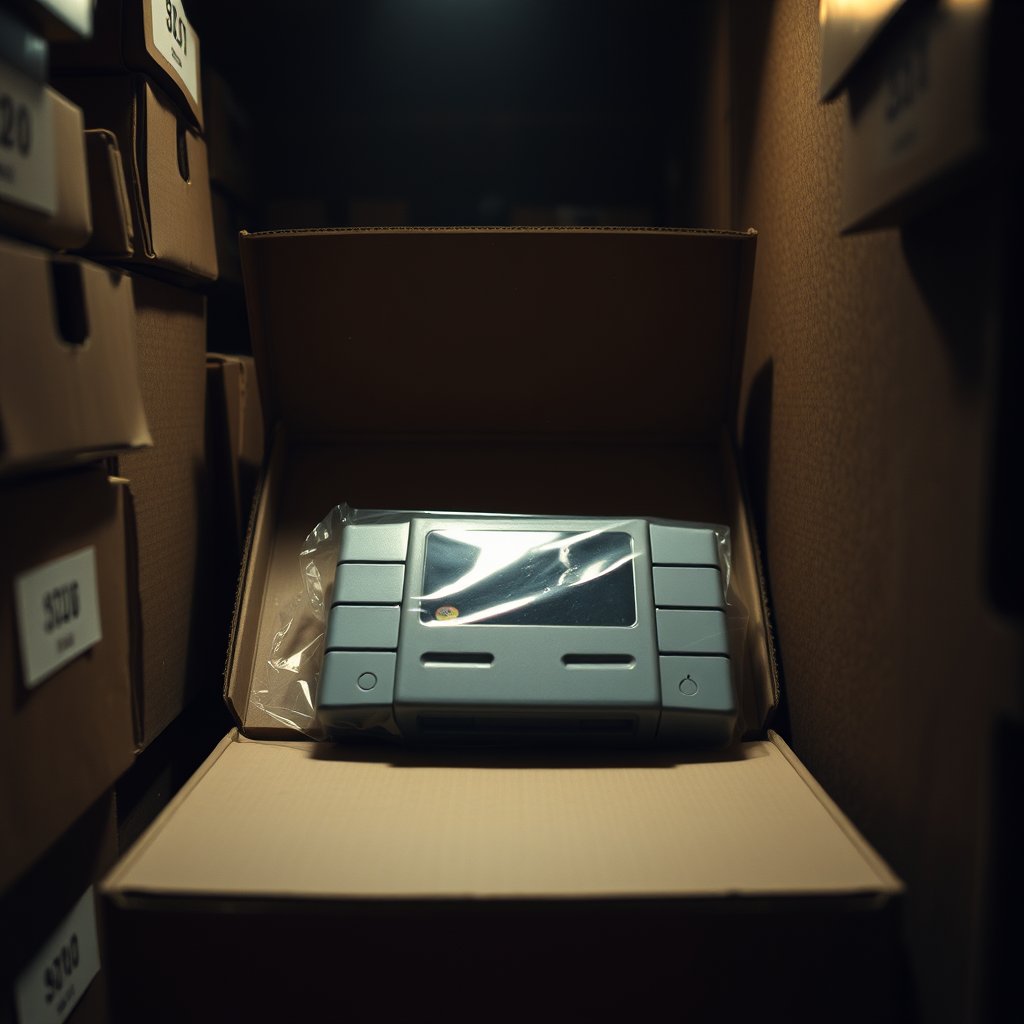
A back-room case of dusty gray plastic almost went out the door at ten to fifteen dollars a piece. That case turned out to hold 97 individually shrink-wrapped Super Mario Bros./Duck Hunt cartridges for the Nintendo Entertainment System — a version of the pack-in game that no collector, price guide, or grading company had ever documented. Five of them came back from PSA carrying a grade that, according to the reporting on the find, no Nintendo cartridge had ever received before: a perfect 10.
The story broke on August 10 and 11, 2026, and it has the shape every collector daydreams about. A shop owner nearly undersells a grail by three or four orders of magnitude, an expert walks in at the right moment, and a storage room quietly rewrites part of the hobby's record book. It is a fun story. It is also a genuinely useful one, because it says something concrete about how much is still unknown in a field people assume was mapped decades ago.
What Was Actually Found
The discovery happened at OneStopWonders, a retro game shop in downtown Waukesha, Wisconsin. Owner Kevin Braun came across a sealed factory case holding cartridges of the Super Mario Bros./Duck Hunt multicart, the game that shipped with millions of NES consoles. By the standards of retro pricing, loose copies of that game are close to worthless — it is one of the most common NES cartridges in existence. That is exactly why the case nearly got priced at roughly $10 to $15 each and moved as bulk inventory.
Before that happened, Nintendo collector and authenticator Jason Ganos of Nintendo Wire examined the case. What he found was not the standard cartridge everyone already owns. It was a distinct, previously unrecorded production variant. As Tom's Hardware reported, the case contained 97 untouched cartridges, and multiple copies earned PSA's top grade.
The original shipping box was labeled for 100 units; 97 were present. A shipping label on the case is dated December 19, 1995 — years after the NES had been retired as Nintendo's flagship console.
The Details That Make It a Variant
A rare variant is not just a matter of an old sticker. The distinguishing marks here are specific and consistent, which is what convinced an authenticator this was a real production run and not a fluke:
- Multilingual back labels rather than the standard single-language label most North American copies carry.
- A manual wording change: the text reads "maintenance or service" where standard manuals read "maintenance or repairs." A single swapped word, but a deliberate one.
- 1993 manufacturing codes, specifically week 40 date stamps, on cartridges packed in a case shipped in late 1995.
- A box marked "Remanufactured NES," pointing to a late-life factory refurbishment or repackaging program rather than an original 1980s production run.
Put together, those clues describe a late-production or remanufactured batch that Nintendo apparently assembled well after the NES had faded from store shelves, using older cartridge stock and updated labeling. If you want the mainstream summary of the find, NewsNation covered it here. One caution worth stating up front: some aggregated coverage floated headline figures in the millions. Treat those numbers with heavy skepticism. There is no established market for this variant yet, so any dollar figure is an estimate, not a comp.
Why "First-Ever PSA 10" Actually Matters
Grading companies have slabbed sealed games for years, and eye-watering prices for sealed NES titles have made headlines before. But the reporting on this find frames the five perfect grades as the first PSA 10s ever assigned to a Nintendo cartridge. If that holds, it is a meaningful line in the sand.
A perfect grade on a mass-produced cartridge is extraordinarily hard to earn because these were toys, packed by the pallet and shipped to be played. Corners get dinged, shrink wrap wrinkles, labels shift. For five copies from a single case to hit PSA 10 tells you two things at once: the case was genuinely sealed and untouched since 1995, and the population of true gem-mint sealed NES carts is effectively tiny.
That scarcity is the whole ballgame in graded collectibles. A new top-of-population grade resets the ceiling for an entire category. Collectors who own high-grade sealed NES games are watching closely, because the existence of confirmed 10s changes how every 9 and 9.5 gets valued underneath it. If you are trying to understand condition tiers on your own shelf, the same grading logic we walk through in our Dreamcast disc rot identification and prevention guide applies here: condition is a spectrum, and the top of that spectrum is where nearly all the value concentrates.
As an Amazon Associate we earn from qualifying purchases. If you own sealed or high-grade NES carts, protecting them properly is the first move — start with a proper → Shop acrylic cartridge display case on Amazon that shields the label and shrink wrap from handling and UV.
Where These Carts Go Next
Three copies from the case — including one of the PSA 10 examples — are headed to Goldin Auctions, with bidding reported to open on August 12, 2026. That is the moment the "worth millions" speculation meets reality. An auction result is a real comp; a viral headline is not. Whatever the hammer prices land at, they will become the first genuine data points for a variant that had zero market history a week ago.
The likely range, based on how comparable first-of-kind graded finds have behaved, is four figures for strong grades and potentially five figures for a PSA 10. That is an estimate, and it is deliberately conservative. First-to-market slabs sometimes overshoot on novelty and settle later; sometimes a bidding war between two determined collectors produces a number nobody can replicate. Either way, the smart move for readers is to watch the results rather than the pre-sale hype.
What This Means for the Rest of Us
The most useful takeaway from this story is not the money. It is the reminder that the retro catalog is not finished. A game that ships in nearly every NES box still had an undocumented factory variant sitting undiscovered for three decades, in a case that almost got liquidated for pocket change. If that can happen with the single most common NES cartridge on Earth, the odds that rarer titles hide undocumented variants are much higher than the hobby's price guides would suggest.
This is why serious collecting rewards patience and observation over checklists. The people who spot these variants are the ones who look closely at labels, date codes, and manual text that everyone else ignores. That habit is exactly what turned a $15 bin item into record-book history here.
If you want to build that eye, the fundamentals carry across every platform. Our breakdown of Sega Saturn model differences is a good example of how small hardware and labeling variations separate common units from the ones collectors actually chase — the same discipline that flagged this NES case.
How to Spot a Rare Variant in Your Own NES Box
You do not need to be an authenticator to do a first-pass check on cartridges you already own. Here is a practical routine.
Read the back label carefully. Standard North American NES carts use a single-language back label. Multilingual labels, unusual layouts, or labels with different Nintendo part numbers than the common version are worth a second look. Photograph both the standard and the odd one side by side.
Check the date and manufacturing codes. NES carts carry molded date stamps and printed codes. A date code that does not match the game's known release window — like a 1993 stamp on a title that "shouldn't" have one — is a flag, not proof, but it is exactly the kind of mismatch that started this whole story.
Compare manual wording. The "maintenance or service" versus "maintenance or repairs" difference is subtle, and it is the kind of thing you only catch by owning multiple copies and actually reading them. If you have duplicates, put the manuals side by side.
Note anything that says "remanufactured" or "refurbished." Late-life Nintendo repackaging programs produced boxes and inserts that differ from original retail. Those are not damaged goods — in this case, they are the story.
Before you handle anything you suspect might be special, clean and stabilize it gently. A soft, non-abrasive → Shop retro cartridge cleaning kit on Amazon removes surface grime from the connector and shell without scrubbing away printing or date stamps. And whatever you do, do not remove shrink wrap or reseal anything — sealed condition is precisely what earned those five PSA 10s.
Storing and Protecting Cartridges the Right Way
If this find has you looking at your own shelf differently, storage is where value is won or lost over time. Loose cartridges rattling in a drawer accumulate exactly the label wear and corner dings that keep grades low. A rigid, dust-controlled → Shop NES game storage case on Amazon keeps carts upright, separated, and away from the friction that degrades condition.
For anything you consider a keeper, individual protection matters even more. Slipping each cartridge into a → Shop NES cartridge dust sleeve on Amazon shields the label and vents while still allowing airflow, which matters for long-term storage in variable humidity. The restoration and preservation principles we cover in our retro console plastic restoration guide apply to cartridge shells too: stable temperature, low UV exposure, and gentle handling preserve both the plastic and the printing that authenticators actually read.
The Bottom Line
A Wisconsin shop nearly sold a piece of NES history for the price of a fast-food lunch. Instead, a careful authenticator recognized an undocumented remanufactured variant, five copies earned the first perfect PSA grades ever given to a Nintendo cartridge, and three examples are about to test the market at auction. The dollar figures are still estimates — watch the August 12 Goldin results before believing any specific number, and ignore the "millions" headlines until a hammer says otherwise.
The lasting lesson is simpler and more encouraging than any price. The retro catalog still has undiscovered corners, even in its most common titles. Look closely at what you already own. The next storage-room grail might be sitting in a box you have owned for years.
FAQ
What exactly was found in the Wisconsin shop? A sealed factory case of 97 individually shrink-wrapped Super Mario Bros./Duck Hunt NES cartridges, representing a previously undocumented production variant. The box was originally labeled for 100 units and carried a shipping label dated December 19, 1995.
Why is this variant considered rare if the game is so common? The cartridges themselves are common, but this specific version has multilingual back labels, a "maintenance or service" manual wording change, 1993 week-40 manufacturing codes, and a box marked "Remanufactured NES." That combination had never been documented before, making it a distinct and previously unrecorded variant.
Is it true these are the first PSA 10 Nintendo cartridges ever? That is how the initial reporting frames the five perfect grades. It is a striking claim and, if confirmed, it resets the top of the population for sealed NES cartridges. As with any breaking collectibles story, treat it as reported rather than settled until the grading data is fully public.
How much are they worth? There is no established market yet, so every figure is an estimate. Reasonable expectations run to four figures for high grades and potentially five figures for a PSA 10, but the August 12, 2026 Goldin Auctions results will provide the first real comps. Ignore aggregated "worth millions" headlines until an actual sale supports them.
Could I have a rare NES variant without knowing it? Possibly. Check back labels for multilingual or unusual layouts, look for date codes that do not match a game's known release window, compare manual wording across duplicate copies, and note any packaging marked "remanufactured" or "refurbished." Those are the same clues that flagged this find.
Some links on this page are affiliate links. We may earn a small commission if you purchase through them, at no extra cost to you.
As an Amazon Associate we earn from qualifying purchases. This article contains affiliate links; if you buy through them we may earn a small commission at no additional cost to you.